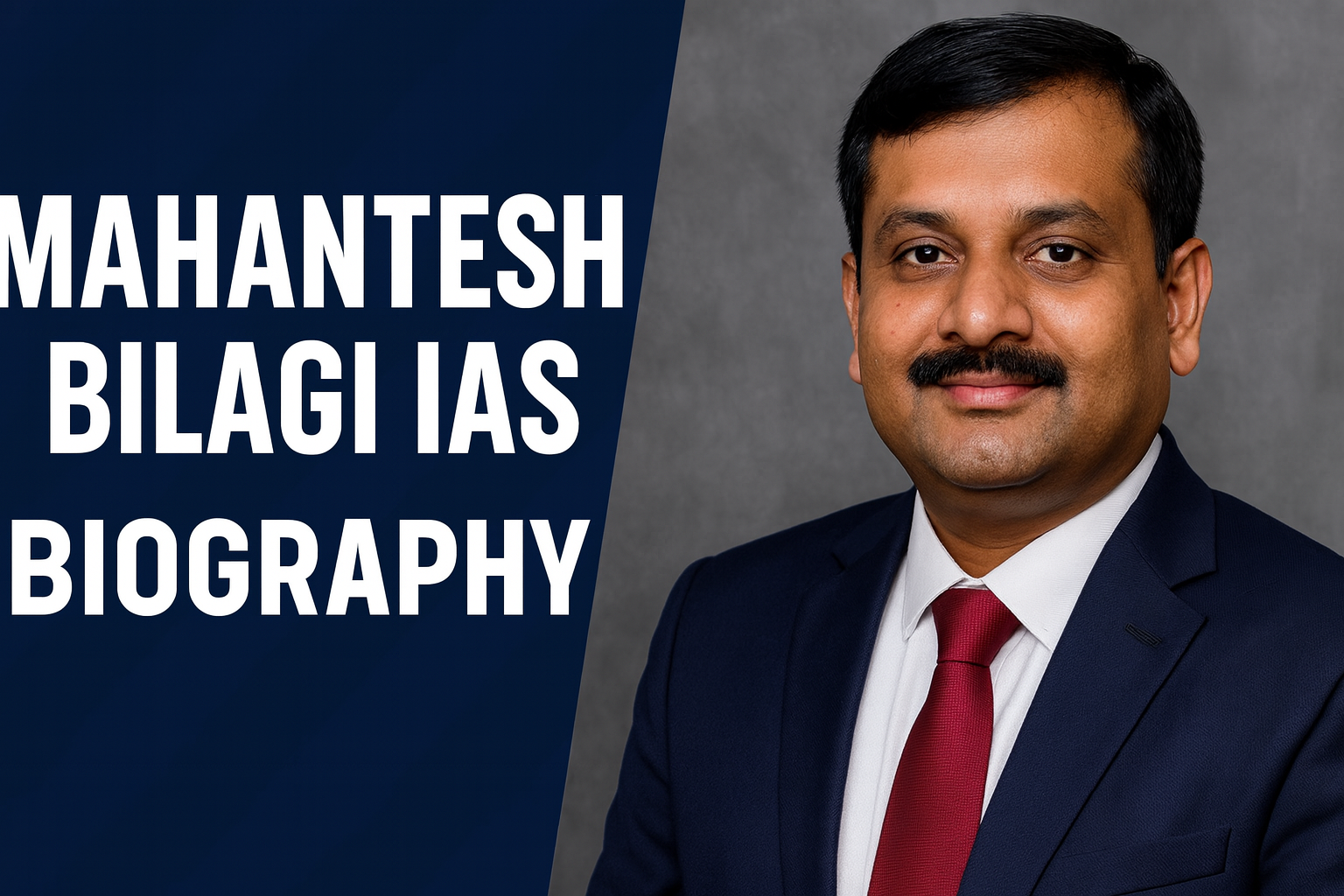
Mahantesh Bilagi IAS Biography
Mahantesh Bilagi built a reputation as a steady and principled civil servant whose career reflected discipline, clarity of purpose, and a deep sense of duty. He belonged to the 2012 batch of the Indian Administrative Service and served Karnataka in various administrative roles, including assignments at BESCOM and the Karnataka State Minerals Corporation. Known for his calm manner and organized way of working, he often approached public issues with careful thought rather than public display.
Born in Ramdurg in the Belagavi district of Karnataka, he grew up in an ordinary household that placed value on education and steady effort. Those who knew him during his student years recall his discipline, interest in public affairs, and strong personal routine. His path to the civil services was shaped more by consistent hard work than by sudden breakthroughs, and this same pattern followed him throughout his professional life.
Early Life and Background
Mahantesh Bilagi was born in Ramdurg, a small but historically significant town in northern Karnataka. His family lived a modest life rooted in traditional community values. Growing up, he witnessed the practical challenges faced by rural households, a reality that later shaped his interest in public administration.
From a young age, he displayed a stable temperament and a preference for structured routines. Teachers from his early schooling often described him as dependable, focused, and attentive. He was not known for loud ambition, but rather for steady progress in whatever task he undertook.
The social environment of Belagavi district, with its mix of rural life, local governance structures, and agricultural networks, helped him understand daily public issues at a close range. This background later influenced his administrative approach, especially his focus on systems, accountability, and service delivery.
Education
Bilagi completed his schooling in Ramdurg, where he consistently performed well academically. His interest in subjects related to governance, economics, and social issues became evident during his high-school years. He developed the habit of reading newspapers regularly, a practice that helped him build a broad understanding of national affairs.
Higher Studies
He continued his education in Karnataka, pursuing undergraduate studies with a strong interest in public administration and development studies. While his exact degree has been referenced in various public records, what stands out is his disciplined preparation for the Civil Services Examination.
During this time, he maintained a structured lifestyle built around reading, note-making, regular revision, and self-study. Friends from his college years often described him as focused and reserved, with a clear sense of direction even before he entered the IAS.
Civil Services Preparation
His preparation for the UPSC examination followed a methodical pattern. Instead of relying heavily on coaching, he depended on personal discipline, long study hours, and continuous self-evaluation. After clearing the exam, he was selected for the 2012 IAS batch, marking the beginning of his administrative career.
Career
Soon after completing his training, Bilagi took up roles across Karnataka that exposed him to district-level governance. His early years included work related to rural development, public distribution, administrative monitoring, and coordination between local bodies and state departments.
Colleagues recall that he preferred detailed documentation and expected clarity in all official communications. These habits helped him handle complex responsibilities later in his career.
One of the most publicized segments of his career was his time at Bangalore Electricity Supply Company (BESCOM). Here, he worked on improving service delivery, overseeing administrative coordination, and managing operational matters related to urban electricity supply.
His tenure coincided with a period when Bengaluru faced notable challenges in power distribution, technical issues, and customer service expectations. Bilagi was known for his calm handling of pressure and his ability to maintain neutrality in sensitive administrative decisions.
Later, he was assigned to the Karnataka State Minerals Corporation (KSMC). This role required oversight of mining-related operations, regulatory compliance, and coordination with state authorities. The sector itself was complex due to economic interests, environmental considerations, and legal frameworks.
Bilagi handled his responsibilities with restraint and adherence to established procedures, which earned him respect among peers.
Administrative Style
Across all his postings, he remained consistent in three habits:
-
Careful review of files
-
Clear written communication
-
Preference for structured decision-making
He rarely sought public attention, maintaining a professional distance from political pressures. Those who worked under him often observed that he managed official tasks with quiet seriousness rather than with showmanship.
Age
While public reports mention that Bilagi was in his 40’s at the time of his passing, official documents regarding his exact birth year are not widely published. Based on available official and media records, he is estimated to have been around 42 to 44 years old in 2025.
Personal Life
Mahantesh Bilagi preferred to keep his personal life away from public attention. Those who knew him describe him as reserved, thoughtful, and consistent in his habits. He valued privacy and rarely spoke about his family in public settings. Despite the demands of administrative service, he attempted to preserve a balanced domestic routine, often avoiding unnecessary public engagements outside work.
He maintained a calm and measured personality. Close associates recall that he avoided conflict and approached most situations with patience. His life outside work centered on reading, long walks, and occasional travel when his schedule allowed. Friends often described him as someone who preferred meaningful conversations to social gatherings.
His personal philosophy reflected the values he carried into his career. He believed in structure, order, and quiet perseverance, and he frequently expressed the view that public service required restraint and discipline more than visibility. This togetherness between his personal values and professional conduct shaped the impression he left on colleagues throughout his postings.
Leadership
Throughout his postings, Bilagi was known for a steady and methodical approach to administration. His leadership style rested on a few traits that remained consistent across different departments:
1. Reliance on Documentation
He preferred written communication and insisted on clear records. Files under his supervision often carried precise notes, reflecting his habit of studying each matter carefully before reaching a decision.
2. Neutral Decision-Making
He maintained distance from political influence and approached issues strictly through procedural lenses. This neutrality earned him respect among staff who valued consistency in leadership.
3. Quiet Discipline
He did not rely on forceful gestures or loud directives. Instead, he expected punctuality, accuracy, and responsibility from every member of his team. His composed manner often brought steadiness during periods of administrative pressure.
4. Focus on System Efficiency
Rather than pushing for public recognition, he concentrated on improving internal processes. Whether dealing with electrical supply issues at BESCOM or coordinating regulatory requirements in the mining sector, his focus remained on system-level clarity.
Achievements
While Bilagi did not pursue public visibility, his work contributed to several important administrative improvements. His achievements can be understood through the steady impact he made in each posting.
BESCOM
At BESCOM, he contributed to efforts aimed at improving consumer response systems and streamlining internal coordination. His tenure coincided with phases when Bengaluru faced rising electricity demand and operational challenges. Staff often noted that he managed high-pressure situations without allowing them to affect workplace order.
District-Level Governance
During his early postings, he worked closely with local bodies on issues related to public distribution, rural development, and administrative oversight. His contributions helped implement state-level directives more efficiently in several regions.
Mining and Regulatory Frameworks
At the Karnataka State Minerals Corporation, he played a role in improving file processing, strengthening internal compliance checks, and maintaining communication between various regulatory bodies. His work helped stabilize administrative procedures during a period of transition within the department.
Professional Reputation
Although he did not receive widely publicized awards, his reliability, adherence to procedure, and calm management style created a reputation for dependability. Senior officers often described him as someone who could be trusted with assignments requiring careful attention.
Challenges During His Career
Like many civil servants, Bilagi worked in sectors where administrative decisions intersect with public expectations, political interests, and institutional complexities. Some of the challenges associated with his postings included:
1. High Public Demand at BESCOM
Electricity supply in major urban centers often draws public scrutiny. Managing complaints, ensuring service continuity, and coordinating technical teams placed significant pressure on senior administrators.
2. Regulatory Complexity in the Mining Sector
Mining operations involve environmental rules, legal frameworks, and financial oversight. Ensuring compliance while maintaining operational continuity required measured decision-making.
3. Administrative Strain
Long working hours, responsibility for public services, and the constant expectation of neutrality form part of the larger pressures faced by many IAS officers. Those around him often noted that he carried these responsibilities with quiet discipline, though the demands were considerable.
Later Years and Work Responsibilities
In his later years of service, Bilagi continued to work within Karnataka’s administrative network, handling sensitive departmental responsibilities. As the workload expanded, he maintained his structured routine and continued to rely on documentation and careful review of every matter brought before him.
He kept a limited public presence even as headlines occasionally drew attention to the institutions where he served. Through shifting administrative priorities and evolving public expectations, he remained committed to the principles that had guided him since his early career.
Death
Mahantesh Bilagi passed away on November 25, 2025. Reports indicated that he died by suicide, a development that drew significant public attention across Karnataka and beyond. His death occurred at a time when he was serving in an important administrative role, leading to widespread discussion about the pressures faced by civil servants.
Public statements from authorities and colleagues expressed grief and concern, noting the loss of a dedicated officer who had maintained clarity and sincerity throughout his career. His passing also opened conversations about mental health within the civil services, a subject rarely discussed openly in administrative circles.
Public Response
Following the news of his death, several officials, professional associations, and members of the public expressed condolences. Many who had worked with him described him as diligent, systematic, and respectful in all interactions.
The response was marked by:
-
Recognition of his professionalism
-
Concerns about stress and administrative pressures
-
Tributes from peers who valued his steady work ethic
The incident prompted broader reflection on the structural strains within public institutions and the need for support systems for officers handling sensitive responsibilities.
Legacy
Bilagi’s legacy rests not on public honors or high-profile achievements, but on the steady contribution he made through disciplined service. His career illustrated the important, often unseen, work carried out by officers who prioritize procedure, neutrality, and public welfare.
His life is remembered for:
-
Integrity
-
Consistency in leadership
-
Commitment to administrative order
-
A calm and thoughtful approach to public service
For many younger officers, his career offers an example of how persistent effort and adherence to principles can shape a meaningful professional journey.
FAQs
Who was Mahantesh Bilagi IAS?
He was a 2012-batch IAS officer from Karnataka known for disciplined service in BESCOM, district administration, and the Karnataka State Minerals Corporation.
What was Mahantesh Bilagi’s age?
Public records suggest he was in his early forties at the time of his death in 2025.
What roles did he serve?
He served in district administration, BESCOM, and later at the Karnataka State Minerals Corporation.
What was his leadership style?
His style focused on documentation, neutrality, calm decision-making, and system-level efficiency.
How did he die?
He died on November 25, 2025. Reports state that his death was a suicide.
What is his legacy?
He is remembered for integrity, disciplined administrative work, and a committed approach to public service.